
u201cDad! You have already brushed your teeth twice this morning, you can go eat now.u201d
u201cNo! You silly, that was yesterday, you are always forgetful!u201d
u201cOh, thank you little one, youu2019re so kind to help me with my bags, here have some sweets, you know what, I have a daughter just like you, she is currently at school, and she is also a helpful girlu2026u2026u201d
u201cGrandma, mumu2019s already in her forties, I am your granddaughter Janeu2026u2026u201d
u201cMum! Remember to not take down your tag, ok? It has my phone number, in case you are lost and cannot remember the way home.u201d
u201cExcuse me, have you seen this old man before? About 163cm, wearing a blue striped polo shirt. He has been missing and he hasu2026u2026u2026
Alzheimer.
Thatu2019s right, Alzheimer’s (u963fu5c14u8328u6d77u9ed8u75c5). The above conversations are some of the daily routines of Alzheimer patients with their family members. It is like an adult suddenly becomes a child with childish behaviour as they slowly lose their memories.
Alzheimeru2019s disease is a progressive neurological condition that affects memory, language, attention and behaviour. As the most common cause of dementia, it primarily affects older adults, and although it is rare, symptoms can appear earlier. In simple terms, Alzheimeru2019s gradually impairs an individualu2019s independence, leading to changes that affect the whole family.
What Are the Signs and Symptoms of Alzheimeru2019s?
Early signs of Alzheimeru2019s often appear as mild memory loss, but the condition progresses to affect various aspects of cognitive and physical health. Key symptoms include:
- Memory Loss: Forgetting recent events, names, conversations or misplaced items
- Difficulty Solving Problems: Struggling with planning or completing once simple tasks
- Problems with speech or language: Asking questions repetitively, Having trouble thinking of the right word
- Confusion with Time or Place: Losing track of dates or familiar environments
- Challenges in Understanding Visual Images: Difficulty reading, judging distance, or perceiving contrast
- Mood and Personality Changes: Withdrawal from social activities, increased confusion, and mood swings
Detecting Alzheimeru2019s Disease
- Biomarkers in Blood Tests:
- Homocysteine Levels:
Elevated homocysteine is associated with increased risk of Alzheimeru2019s and cognitive decline, potentially indicating damage to blood vessels in the brain.
- Vitamin Deficiencies:
Low levels of vitamins B12 and D are commonly assessed, as deficiencies can worsen cognitive symptoms and mimic early dementia signs.
- Imaging Scans:
- CT Scan (Computed Tomography):
A CT scan can reveal brain atrophy, shrinkage of brain tissue, and other structural abnormalities that are more common in Alzheimeru2019s patients.
- MRI (Magnetic Resonance Imaging):
MRI provides detailed images of brain structure, helping to identify areas of degeneration or shrinkage in key brain regions affected by Alzheimeru2019s, such as the hippocampus.
- Cognitive Assessments:
- Memory and Cognitive Testing:
Cognitive assessments, like the Mini-Mental State Examination (MMSE) or Montreal Cognitive Assessment (MoCA), evaluate memory, problem-solving, and other cognitive functions to determine levels of impairment.
- Neuropsychological Testing:
In-depth neuropsychological tests assess specific brain functions, such as language, attention, and memory, to better understand cognitive changes.
Dietary Recommendations for Brain Health
As such, it is recommended that Alzheimeru2019s individuals can ensure adequate nutrient intake of:
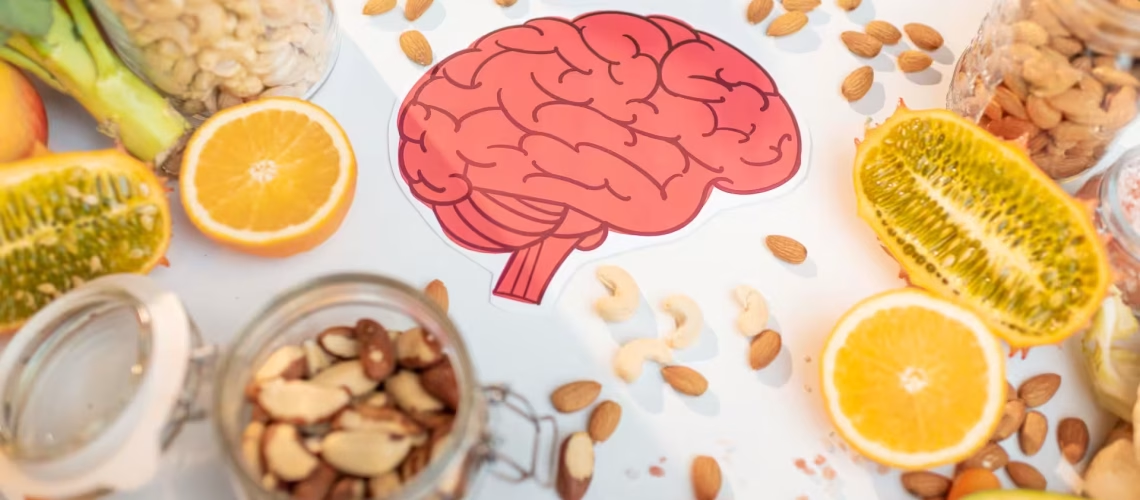
- High-Folate Foods: Foods rich in folate, such as dark green leafy vegetables (asparagus, spinach, lettuce), Legumes (beans, peas, lentils), citrus fruits (orange, grapefruit, limes), avocados and banana are essential for brain health. Folate plays a key role in reducing homocysteine levels, an amino acid associated with cognitive decline when elevated.
- Antioxidant-Rich Foods: Berries, leafy greens, and nuts contain powerful antioxidants that help protect brain cells from oxidative stress and inflammation.
- Healthy Fats: Omega-3 fatty acids found in fatty fish, flaxseeds, and walnuts play an essential role in maintaining brain cell structure and function.
- Whole Grains: Complex carbohydrates from whole grains (brown rice, oatmeal, whole-wheat bread, flour or pasta, barley and quinoa) support steady energy levels and may reduce spikes in blood sugar, which have been linked to cognitive decline.
- Lean Proteins: Incorporating proteins from sources like legumes, poultry, and fish can support overall brain function.
- Hydration: Staying well-hydrated is essential, as even mild dehydration can impact focus and memory.
These dietary guidelines are designed to promote brain health, support cognitive function, and provide the foundation for a well-balanced lifestyle.
Take Action Today for Better Brain Health
Your support can make a significant impact on your loved oneu2019s life. By investing in nutrition-focused Alzheimeru2019s care, youu2019re taking a powerful step toward improving their overall health and well-being. Letu2019s work together to build a supportive, personalized plan that benefits the whole family.
Book a Session with Us
Take the first step toward improving your cognitive health by booking a Diet Consultation Session (RM 399), which includes:
- A 1-hour NFPE nutrition-focused physical examination (certified by Rutgers University on malnutrition assessment).
- Anthropometry measurements (muscle mass, fat, weight).
- A detailed diet assessment and consultation with a dietitian on personalized diet plan (certified by KKM).
- A 1-hour Muscle Strengthening Session using the Dr. Kiseki medical device (worth RM120), a KKM-certified medical device for neuromuscular health.u00a0
Location: Oval Damansara, Kuala Lumpur
Call: 017-262 6846 (Dietitian Team) to book your appointment.
Let us guide you toward a stronger, healthier you!
Ready for personalized guidance? Book a personalized nutrition consultation.
For more support, see our hub on Healthy Ageing Nutrition.