
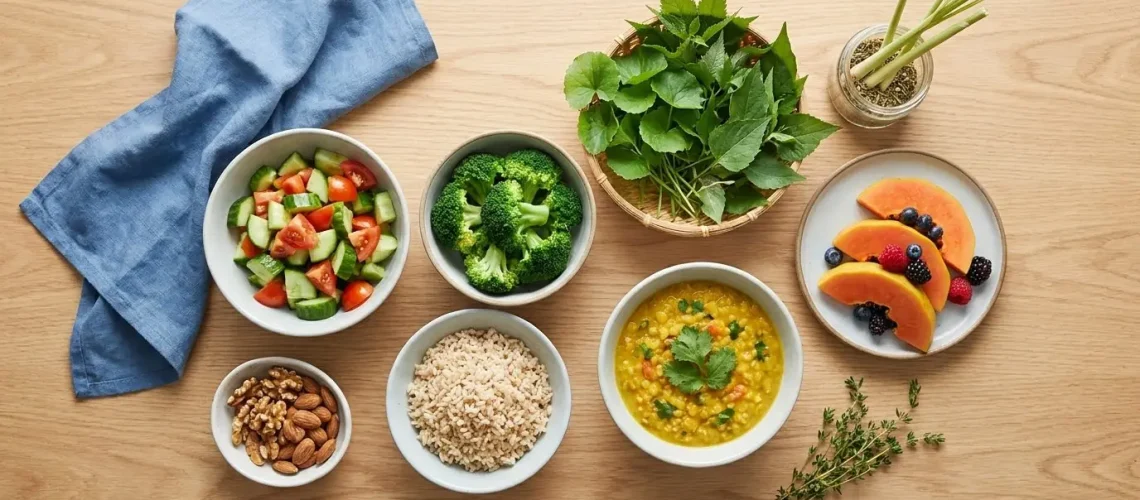
High blood pressure (hypertension) affects roughly 3 in 10 Malaysian adults, according to the National Health and Morbidity Survey (NHMS) — and many people do not feel a thing until it has already strained the heart, kidneys and blood vessels. The good news is that what you put on your plate genuinely matters. The DASH diet (Dietary Approaches to Stop Hypertension) is one of the most well-studied eating patterns for lowering blood pressure, and it can be adapted beautifully to the way we eat in Malaysia. This guide explains how the DASH diet works, what a realistic day looks like with local foods, and how to start safely.
What Is the DASH Diet?
DASH stands for Dietary Approaches to Stop Hypertension. It is not a fad diet or a short-term detox — it is a balanced, everyday eating pattern originally developed through clinical research to help lower blood pressure. Rather than banning entire food groups, DASH shifts the emphasis of your plate toward foods that are naturally rich in blood-pressure-friendly nutrients while cutting back on sodium (salt), added sugar and heavily processed foods.
The DASH eating pattern is built around:
- Plenty of vegetables and fruit at most meals
- Wholegrains such as brown rice, oats and wholemeal bread instead of refined white versions
- Low-fat dairy such as low-fat milk and plain yoghurt
- Nuts, seeds and legumes (beans, lentils, dhal, chickpeas)
- Lean protein such as fish, skinless poultry and tofu
- Less sodium, less added sugar, and less saturated and processed fat
Why does this combination help? These foods are high in potassium, magnesium, calcium and fibre, while being lower in sodium. Potassium in particular helps the body balance out sodium and relax the walls of blood vessels, which supports healthier blood pressure. It is the overall pattern — not one “superfood” — that does the work.
How Much Can DASH Lower Blood Pressure?
In clinical studies, the DASH diet has been shown to lower systolic blood pressure (the top number) by roughly 8 to 14 mmHg in people with hypertension, with even greater benefit when sodium is reduced at the same time. To put that in perspective, that is a meaningful drop — comparable to what some blood pressure medications can achieve. Results vary from person to person, and benefits are usually seen within a few weeks when the pattern is followed consistently. DASH also tends to support healthier weight, blood sugar and cholesterol, which is why it is a cornerstone of good heart-health nutrition.
The DASH Eating Plan: Servings by Food Group
The DASH eating plan was developed by the US National Heart, Lung, and Blood Institute, and it works by pattern, not by banning foods. For a standard 2,000-kcal day, the recommended number of servings from each food group looks like this:
- Whole grains — 6–8 servings a day (brown rice, wholemeal bread, oats, capati)
- Vegetables — 4–5 servings a day (including ulam and stir-fried greens)
- Fruit — 4–5 servings a day (whole fruit, not juice)
- Low-fat dairy — 2–3 servings a day
- Lean protein — 6 or fewer servings of fish, poultry or lean meat a day
- Nuts, seeds and legumes — 4–5 servings a week (dhal counts)
- Fats and oils — 2–3 small servings a day, favouring unsaturated oils over saturated fat like coconut oil and ghee
Your number of servings scales with your calorie needs — a smaller or less active person needs fewer. The pattern is rich in potassium, calcium, magnesium and fibre, and low in saturated fat and sodium — which is why following the DASH eating plan reduces heart disease risk factors overall, not just the blood pressure reading.
Sodium: The Number That Matters Most
For most adults, general guidance is to keep sodium below 2,000 mg per day — that is about 1 teaspoon of salt across the whole day, including salt already hidden in sauces, processed foods and hawker dishes. Many Malaysians eat far more than this without realising it, because so much of our sodium comes from seasonings and preserved foods rather than the salt shaker. Some people, especially those with existing hypertension, may be advised to aim even lower — your dietitian or doctor can guide the right target for you.
The tricky part is that sodium is everywhere in the Malaysian diet. A single bowl of instant noodles can contain most of a day’s sodium, and a splash of soy sauce, budu or a spoon of belacan adds up quickly. The aim is not to make food bland — it is to season smartly with herbs, spices and aromatics so you need less salt.
High-Sodium Malaysian Foods to Limit — and Lower-Sodium Swaps
- Instant noodles & seasoning packets → cook your own noodle soup and use only half the seasoning sachet, or flavour with garlic, ginger and spring onion.
- Soy sauce, kicap and oyster sauce → use reduced-salt (low-sodium) versions and measure with a teaspoon instead of pouring freely.
- Belacan, budu and salted fish (ikan masin) → use in smaller amounts as an occasional accent, and load the dish with fresh chilli, lime, lemongrass and herbs.
- Canned and preserved foods (canned sardines, pickled vegetables, preserved plums) → choose fresh or frozen, and rinse canned foods to remove some sodium.
- MSG-heavy and extra-salty hawker dishes → ask for “kurang garam” (less salt) and less gravy/kuah, and skip the extra soy sauce on the table.
- Processed meats (sausages, nuggets, luncheon meat) → swap for fresh fish, chicken, eggs, tofu or tempeh.
- Sweet drinks such as teh tarik, sirap and packet drinks → choose plain water, kurang manis, or unsweetened tea; sugary drinks work against your overall metabolic health.
A Sample 1-Day DASH Meal Plan, Malaysian Style
You do not have to eat unfamiliar “Western” food to follow DASH. Here is an example of how a typical Malaysian day can be adapted. Portions should be tailored to your needs — this is an illustration, not a prescription.
| Meal | DASH-Friendly Malaysian Example |
|---|---|
| Breakfast | Wholegrain oats with low-fat milk and sliced banana or papaya; or 2 slices wholemeal bread with peanut butter and a boiled egg. Unsweetened tea or plain water. |
| Lunch | Brown rice with grilled or steamed fish, stir-fried sayur (kangkung, long beans) using minimal salt, plus a plate of ulam (raw local greens) with a lime-and-chilli dip instead of sambal belacan. |
| Snacks | A handful of unsalted nuts, plain yoghurt, or a piece of fruit such as guava, orange or watermelon. |
| Dinner | Thosai or brown rice with dhal (lentils) and a vegetable curry made with less salt and coconut milk in moderation; a side of cucumber and tomato. Fresh fruit for dessert. |
Notice the pattern: vegetables and fruit at every meal, wholegrains instead of white rice, legumes and fish for protein, nuts and yoghurt for snacks, and water instead of sweet drinks. That is DASH in everyday Malaysian form.
Practical Tips to Start the DASH Diet in Malaysia
- Season with herbs and spices instead of salt: lemongrass, ginger, garlic, turmeric, chilli, kaffir lime leaves and pandan add big flavour with no sodium.
- Switch to brown rice or mix half white and half brown rice while your family gets used to the texture.
- Fill half your plate with vegetables and ulam at lunch and dinner.
- Read labels and compare the sodium content per serving — choose the lower one.
- At hawker stalls, ask for less gravy, less salt and no added soy sauce, and choose grilled or steamed over deep-fried.
- Make changes gradually. Your taste buds adjust to less salt over a few weeks, and small consistent swaps beat an all-or-nothing overhaul.
When to See a Doctor or Dietitian
The DASH diet is a supportive tool, not a replacement for medical care. If you have been prescribed blood pressure medication, do not stop or change it on your own — even if your readings improve. Always speak to your doctor before adjusting any medication. See your doctor promptly if you have very high readings, severe headache, chest pain, breathlessness or vision changes, as these can signal a medical emergency.
Everyone’s needs are different — especially if you also have diabetes, kidney disease, are pregnant, or take medications that affect potassium. A registered dietitian can translate the DASH pattern into a realistic plan that fits your health conditions, budget, culture and taste, and can monitor your progress safely alongside your medical team.
DASH Diet Food List: What to Eat and What to Limit
A simple way to follow the DASH pattern is to lean into the “eat more” list and be mindful of the “eat less” list. Here is a DASH diet food list adapted for what is available in Malaysia.
- Eat more: leafy greens and local vegetables (kangkung, sawi, bayam), ulam, fruit (guava, papaya, banana, orange), wholegrains (brown rice, oats, wholemeal bread), legumes (dhal, chickpeas, beans), unsalted nuts and seeds, fish, skinless chicken, tofu, tempeh and low-fat milk or plain yoghurt.
- Eat less: salty sauces and seasonings (soy sauce, kicap, belacan, budu, salted fish), instant noodles, processed and canned foods, deep-fried food, fatty and processed meats, and sugary drinks and desserts.
DASH vs the Mediterranean Diet
People often ask how DASH compares to the Mediterranean diet. Both emphasise vegetables, fruit, wholegrains, legumes, fish and healthy fats, and both are excellent for heart health. The key difference is focus: DASH was specifically designed to lower blood pressure and places extra emphasis on cutting sodium and boosting potassium, calcium and magnesium. For many Malaysians with hypertension, DASH is the more targeted starting point, and the two patterns overlap so much that following one naturally supports the other.
Benefits Beyond Blood Pressure
While DASH is best known for lowering blood pressure, its benefits go further. Because it is rich in fibre and wholefoods and low in processed salt and sugar, the DASH diet can also support healthier cholesterol, steadier blood sugar, better weight management and lower long-term risk of heart disease and stroke — which is why dietitians recommend it for overall metabolic health, not just hypertension.
Frequently Asked Questions
What does DASH diet stand for?
DASH stands for Dietary Approaches to Stop Hypertension. It is a balanced, everyday eating pattern developed through clinical research to help lower blood pressure, built around vegetables, fruit, wholegrains, low-fat dairy, legumes and nuts, with reduced sodium, added sugar and processed food.
Can the DASH diet replace my blood pressure medication?
No. DASH can help lower blood pressure and may, over time, allow your doctor to review your treatment — but you should never stop or reduce prescribed medication on your own. Any medication change must be decided together with your doctor based on your readings.
How quickly does the DASH diet lower blood pressure?
Many people see improvements within about two to four weeks of following the pattern consistently, particularly when sodium is reduced at the same time. The biggest and most lasting benefits come from sticking with it long term rather than treating it as a short diet.
Is DASH suitable for Malaysian food and eating out?
Yes. DASH is about the overall balance of your plate, so it adapts easily to local meals — brown rice, fish, dhal, plenty of sayur and ulam, and fruit. When eating out, ask for less salt and gravy, skip the extra soy sauce and sambal, and choose water over sweet drinks.
How much salt is allowed on the DASH diet?
General guidance is under 2,000 mg of sodium a day, roughly 1 teaspoon of salt including what is hidden in sauces and processed foods. Some people with hypertension may be advised to aim lower. A dietitian can help you find your personal target and stay within it without bland food.
Can I still have teh tarik and sweet kopi?
Occasionally, in moderation — but sugary drinks work against your heart and metabolic health, so they are best kept as a treat rather than a daily habit. Order kurang manis, choose unsweetened tea or coffee, and make plain water your main drink.
Get a DASH Plan Built Around You
Lowering your blood pressure through food is very achievable, but the details — portions, sodium targets, medication interactions and your favourite local dishes — are personal. Our registered dietitian, Jaceme Chuah, at Home Dietitians can build a practical, Malaysian-friendly DASH plan tailored to your health and lifestyle. Ready to take the next step? book a consultation with our dietitian and start eating for a healthier heart today.
For a full plan, see our hub on Heart Health Nutrition Malaysia.