
If you or someone you love has just been told they have diabetes or prediabetes, one of the first questions is usually the most practical one: what can I actually eat? The good news is that a diabetic diet in Malaysia is not about banning nasi, mee or your favourite kuih forever. It is about choosing the right foods more often, watching portions, and pairing carbohydrates wisely so your blood sugar stays steadier through the day.
This guide gives you a clear diabetic diet Malaysia food list, a simple healthy-plate model used across Malaysian clinics, and honest answers to the questions we hear most often as dietitians. Use it as a starting point, then work with a professional to fine-tune the details for your body and lifestyle.
How Food Affects Blood Sugar in Diabetes
When you have diabetes, your body struggles to move glucose (sugar) from the blood into your cells for energy. Carbohydrates have the biggest and fastest effect on blood glucose, so the type and amount of carbohydrate you eat matters a great deal. That does not mean carbs are the enemy. Lower-GI, higher-fibre carbohydrates such as wholegrains, legumes and most vegetables raise blood sugar more gently than refined, sugary or heavily processed foods.
The aim is balance: enough carbohydrate for energy, plenty of vegetables and fibre, adequate lean protein, and healthy fats. How your body responds is individual, which is why checking your own blood sugar levels after eating can be so revealing. Two people can eat the same plate of nasi and see very different numbers.
Diabetic Diet Malaysia Food List: Enjoy vs Limit
Here is a practical food list organised by category. Foods in the “Enjoy” column can form the backbone of most meals; foods in the “Limit” column are best kept to smaller portions and special occasions rather than everyday habits.
| Category | Enjoy (choose more often) | Limit (smaller portions, less often) |
|---|---|---|
| Carbohydrates | Brown rice, basmati or parboiled rice, wholemeal roti/chapati, oats, wholegrain bread, sweet potato, quinoa, barley | Large portions of white rice, white bread, roti canai, naan, mee/kuey teow in big servings, glutinous rice |
| Vegetables | Ulam, kangkung, sawi, bayam, long beans, broccoli, cauliflower, bitter gourd, brinjal, salads | Deep-fried or heavily oil-fried vegetables; vegetables cooked in lots of coconut cream |
| Protein | Skinless chicken, fish, egg, tofu, tempeh, dhal and other legumes, lean beef, prawns (in moderation) | Fried chicken skin, processed meats (sausage, nugget, luncheon meat), fatty or heavily battered fried items |
| Drinks | Plain water, plain/unsweetened tea and coffee (kurang manis or kosong), unsweetened soy milk | Teh tarik, kopi with condensed milk, sirap, bandung, soft drinks, packaged juices, sweetened cordials |
| Snacks & Fruit | Guava, apple, pear, orange, papaya and watermelon in fixed portions, plain nuts, plain yoghurt | Kuih, cakes, kaya toast with sugar, biscuits, durian in large amounts, dried fruit, crisps |
Notice that very few foods are truly “forbidden”. Even higher-GI local favourites can fit occasionally when the portion is controlled and the rest of the plate is balanced. The everyday pattern is what shapes your long-term blood sugar and health.
Build a Balanced Plate: Suku-Suku-Separuh
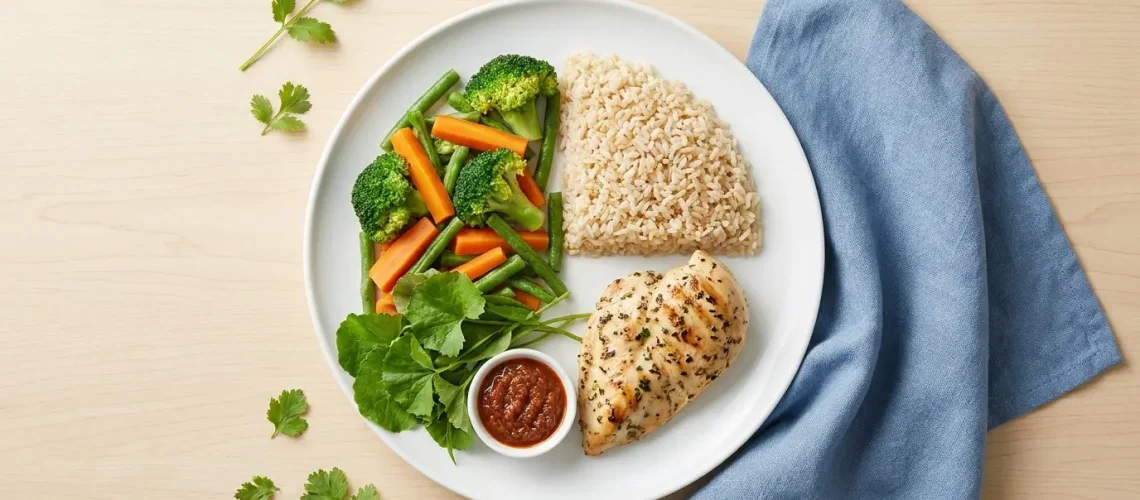
The easiest way to manage portions without counting every gram is the Malaysian healthy plate model, known as suku-suku-separuh (quarter-quarter-half). It is recommended by the Ministry of Health and works beautifully at home, at the mamak, or at the economy rice stall.
- Half the plate (separuh): non-starchy vegetables and ulam, such as sawi, kangkung, salad and stir-fried greens.
- A quarter (suku): carbohydrates, ideally lower-GI choices like brown rice, wholemeal roti or a controlled scoop of rice.
- A quarter (suku): protein, such as fish, skinless chicken, egg, tofu, tempeh or dhal.
- On the side: a serving of fruit and plain water instead of a sweet drink.
Filling half your plate with vegetables naturally leaves less room for rice, adds fibre, and slows down how quickly sugar enters your blood. It is a simple visual rule you can use for the rest of your life, whether you are eating nasi campur, a bowl of noodles, or a home-cooked meal.
The order you eat in can help too. Starting your meal with vegetables and protein, and eating the rice or noodles last, tends to blunt the after-meal blood sugar spike compared with diving into the carbohydrate first. Eating slowly, not skipping meals, and spacing your carbohydrates evenly through the day all support steadier readings.
Smart Hawker and Kopitiam Swaps
Eating out is part of Malaysian life, and you can still make blood-sugar-friendly choices without missing out.
- Ask for less rice or half rice, and add an extra portion of vegetables.
- Choose soup-based noodles or plain rice over fried versions like nasi goreng or char kuey teow when you can.
- Order drinks kurang manis or kosong to cut a lot of hidden sugar from teh tarik and kopi.
- Pick grilled, steamed or soup dishes instead of deep-fried, and remove chicken skin.
- Share the kuih or dessert, or enjoy fruit instead, so the portion stays small.
Foods to Limit for Blood Sugar Control
Some foods raise blood sugar quickly or add a lot of sugar, refined carbohydrate and unhealthy fat with little fibre. The biggest culprits in a typical Malaysian diet are sweetened drinks (teh tarik, kopi with condensed milk, sirap, bandung and soft drinks), large portions of white rice and refined noodles, sugary kuih and cakes, and deep-fried, heavily processed foods like fried chicken, keropok and nuggets. You do not have to eliminate them entirely, but keeping them occasional rather than daily makes a real difference to your numbers over time.
Sweet drinks deserve special mention because they are so easy to overlook. A single glass of teh tarik or a bottled juice can carry several teaspoons of sugar that hit your bloodstream fast, without filling you up. Cutting back on liquid sugar is often the single most powerful change a person with diabetes in Malaysia can make, and many people see their readings improve within weeks.
A Note on Safety and Personalisation
This article offers general guidance only and is not a substitute for personalised medical or dietary advice. Everyone’s carbohydrate needs are different, depending on your body, activity level, medications and other health conditions. Never stop or change your diabetes medication or insulin based on diet changes without speaking to your doctor first, as adjusting food while on certain medicines can affect your risk of low blood sugar. For a plan tailored to your meals, culture and goals, it is worth getting professional diabetes nutrition support from a registered dietitian.
Frequently Asked Questions
Can diabetics eat rice in Malaysia?
Yes. People with diabetes can still enjoy rice; the key is the portion and the type. Keep to about a quarter of your plate, choose brown, basmati or parboiled rice where possible, and always pair it with plenty of vegetables and a protein to slow the rise in blood sugar.
Is brown rice really better than white rice?
Brown rice keeps its bran and germ, so it has more fibre and a lower glycaemic index than white rice, which tends to raise blood sugar more gently. It is a helpful swap, but portion size still matters. If brown rice is hard to switch to at first, try mixing it half-and-half with white rice.
What are the best fruits for diabetics in Malaysia?
Guava, apple, pear, orange and berries are good lower-GI choices, and papaya and watermelon are fine in fixed, moderate portions. Fruit is not off-limits; just eat it whole rather than as juice, keep to one serving at a time, and be mindful with very sweet fruits like durian and ripe mango.
What can I drink instead of teh tarik?
Plain water is the best everyday choice. You can also enjoy tea or coffee ordered kosong or kurang manis, or unsweetened soy milk. Sweetened drinks are one of the biggest hidden sources of sugar in the Malaysian diet, so cutting back here often gives quick, noticeable results.
Do I need to avoid all sugar and kuih completely?
Not necessarily. A small portion of kuih or dessert can fit into an overall balanced diet, especially after a meal with vegetables and protein. The goal is to make these occasional treats rather than daily staples, and to keep portions small so they do not spike your blood sugar.
Get a Personalised Diabetes Meal Plan
A food list is a great start, but the most effective diabetic diet is one built around your real meals, your culture, your medications and your blood sugar readings. At Home Dietitians, dietitian Jaceme Chuah can help you translate this guidance into a practical plan you can follow with confidence. book a consultation with our dietitian to create a personalised plan and take the guesswork out of managing your blood sugar.
Panduan dalam Bahasa Malaysia: Makanan untuk pesakit kencing manis