
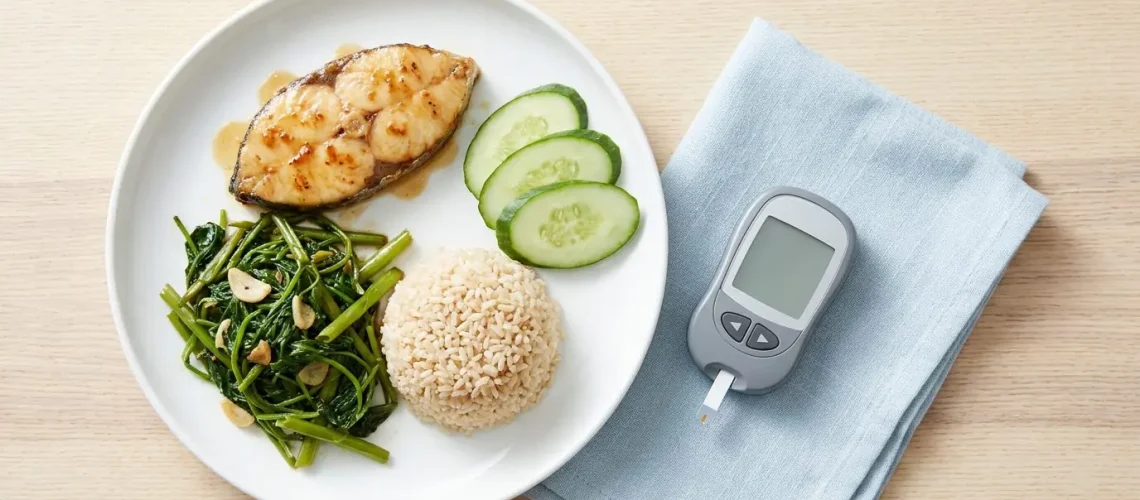
If you have ever checked your blood sugar after a plate of nasi lemak and felt alarmed by the number, you are not alone. Your blood sugar naturally rises after every meal, but how high it climbs and how quickly it settles tells you a lot about your metabolic health. This guide explains what normal blood sugar levels after eating look like, using both mg/dL and mmol/L, and how you can keep your readings steady with everyday Malaysian food choices.
What Happens to Your Blood Sugar After Eating
When you eat, your body breaks down carbohydrates into glucose (sugar), which enters your bloodstream. In response, your pancreas releases insulin, a hormone that helps move glucose out of the blood and into your cells for energy. In a healthy person, blood sugar peaks about 60 to 90 minutes after a meal and returns close to baseline within two to three hours.
The size of that peak depends on what you eat. A meal high in refined carbohydrates such as white rice, roti canai or a sweet teh tarik causes a faster, higher spike than a balanced meal with protein, fibre and healthy fats. When this process works less efficiently, sugar lingers in the blood for longer, which over time is a sign of prediabetes or diabetes.
What Is a Normal Blood Sugar Level After Eating?
For most adults without diabetes, a normal blood glucose level two hours after eating is below 7.8 mmol/L (140 mg/dL). Fasting blood sugar, measured after at least eight hours without food, should be below 5.6 mmol/L (100 mg/dL). Doctors also use HbA1c, a blood test that reflects your average blood sugar over the past two to three months, to confirm the bigger picture.
The table below summarises the reference ranges used in the Malaysian Clinical Practice Guidelines and by the World Health Organization. These are general diagnostic ranges, not a substitute for a proper assessment.
| Category | Fasting | 2 Hours After Eating | HbA1c |
|---|---|---|---|
| Normal | Below 5.6 mmol/L (100 mg/dL) | Below 7.8 mmol/L (140 mg/dL) | Below 5.7% |
| Prediabetes | 5.6 to 6.9 mmol/L (100 to 125 mg/dL) | 7.8 to 11.0 mmol/L (140 to 199 mg/dL) | 5.7% to 6.2% |
| Diabetes | 7.0 mmol/L (126 mg/dL) or higher | 11.1 mmol/L (200 mg/dL) or higher | 6.3% or higher |
A single high reading does not mean you have diabetes. Blood sugar can spike temporarily after a large or very sweet meal, during illness, or when you are stressed or sleep-deprived. What matters is the pattern over time, which is why doctors repeat tests and look at your HbA1c before making a diagnosis.
Why Malaysians Should Pay Extra Attention
Malaysia has one of the highest rates of diabetes in the region. According to the National Health and Morbidity Survey, roughly one in five Malaysian adults lives with diabetes, and many more have prediabetes without knowing it. Our food culture, built around white rice, sweetened drinks and rich, carbohydrate-heavy dishes, makes it easy for post-meal blood sugar to run high day after day.
The encouraging news is that post-meal spikes respond very well to changes in what and how you eat. Small, consistent adjustments to your daily meals can meaningfully lower your readings, often before medication is ever needed. This is where working with a registered dietitian who understands local food can make a real difference.
Signs Your Post-Meal Blood Sugar May Be Too High
Many people with rising blood sugar feel completely fine, which is why diabetes is often called a silent condition. When symptoms do appear after meals, they can include:
- Feeling unusually tired, sluggish or sleepy after eating
- Increased thirst and needing to urinate more often
- Difficulty concentrating or a foggy feeling
- Blurred vision or headaches
- Feeling hungry again soon after a meal
These symptoms are not proof of diabetes on their own, but they are a good reason to get your blood sugar checked properly.
How to Manage Post-Meal Blood Sugar Spikes With Local Food Swaps
You do not have to give up your favourite Malaysian meals to keep your blood sugar steady. The goal is to slow down how quickly sugar enters your bloodstream by rebalancing your plate and making smart swaps. Here are practical, dietitian-approved tips:
- Downsize the rice. Reduce white rice to about half a cup to one cup and fill the rest of your plate with vegetables and protein. Where possible, choose brown rice or add more ulam and greens.
- Add protein to every meal. Include egg, chicken, fish, tofu or tempeh. Protein slows digestion and blunts the sugar spike from rice or noodles.
- Eat vegetables first. Starting your meal with sayur or salad before the rice can lower the post-meal glucose rise.
- Swap sweet drinks. Choose teh tarik kosong or plain water instead of the full-sugar version. A single sweetened drink can add several teaspoons of sugar in one go.
- Rethink breakfast. Trade roti canai with sweet condensed milk drinks for options like thosai with dhal, half-boiled eggs with wholemeal bread, or oats with nuts.
- Choose whole fruit over juice. Whole fruit keeps its fibre, which slows sugar absorption, while juice delivers a fast spike.
- Move after meals. A 10 to 15 minute walk after eating helps your muscles use up glucose and lowers the peak.
When to See a Doctor or Dietitian
You should see a doctor if your fasting blood sugar is repeatedly 5.6 mmol/L (100 mg/dL) or higher, your two-hour post-meal reading is consistently at or above 7.8 mmol/L (140 mg/dL), or you have symptoms such as excessive thirst, frequent urination, unexplained weight loss or persistent fatigue. Seek urgent medical care if readings are very high alongside nausea, vomiting, confusion or breathlessness.
A doctor can confirm a diagnosis and manage any medication, while a registered dietitian translates your numbers into a realistic eating plan built around your lifestyle and Malaysian food preferences. This article is for general education only and does not replace individual medical advice or dosing decisions.
If your readings are creeping up, or you have already been told you have prediabetes or diabetes, personalised guidance makes managing it far less overwhelming. Our team offers structured diabetes nutrition support tailored to how Malaysians actually eat. To get a plan built for your body and your favourite foods, book a consultation with our dietitian, Jaceme Chuah, and start turning your numbers around.
What Does a Specific Reading Mean? (mmol/L Guide)
Because Malaysia mostly uses mmol/L, here is how to read a single post-meal number two hours after eating. Remember that one reading is not a diagnosis, and how high is “too high” depends on whether you already have diabetes and what your doctor has set as your target.
- Below 7.8 mmol/L (140 mg/dL) — normal for someone without diabetes.
- 7.8 to 11.0 mmol/L (140 to 199 mg/dL) — in the prediabetes range for a non-diabetic; a reading like 8, 8.4, 9.1 or 10.2 mmol/L falls here and is worth investigating if it happens often.
- 11.1 mmol/L (200 mg/dL) or higher — points toward diabetes when confirmed, and is generally considered high.
- Consistently very high readings (for example above 15 mmol/L) with symptoms such as vomiting, confusion or breathlessness need urgent medical care.
Blood sugar also rises and falls at different points after a meal. It typically peaks around 30 minutes to 1 hour after eating and should be settling back down by the 2-hour mark, which is why the 2-hour reading is the standard checkpoint on any normal blood sugar levels chart.
Frequently Asked Questions
What level of blood sugar is dangerous?
A post-meal reading of 11.1 mmol/L (200 mg/dL) or higher suggests diabetes when confirmed by a doctor. Readings that are very high — for example above 15 mmol/L — especially alongside nausea, vomiting, confusion, rapid breathing or extreme thirst, can signal a medical emergency and need urgent care. Very low blood sugar (below 4 mmol/L) is also dangerous. If you are unsure, treat persistent extremes as a reason to seek medical help promptly.
What is a normal blood sugar level 1 hour after eating?
For most people without diabetes, blood sugar 1 hour after eating peaks below about 10 mmol/L (180 mg/dL) and then falls, so that by 2 hours it is under 7.8 mmol/L (140 mg/dL). The 2-hour reading is the more widely used reference point, but checking at 1 hour can help you see how high your peak goes after specific meals.
What is a normal blood sugar level 2 hours after eating?
For an adult without diabetes, a normal blood glucose level two hours after eating is below 7.8 mmol/L (140 mg/dL). A reading between 7.8 and 11.0 mmol/L (140 to 199 mg/dL) suggests prediabetes, and 11.1 mmol/L (200 mg/dL) or higher points toward diabetes when confirmed by a doctor.
How long after eating should I check my blood sugar?
The standard time to measure post-meal blood sugar is two hours after the first bite of your meal, because that is when levels have usually returned close to baseline in a healthy person. Some people also check at the one-hour mark to catch the peak. For consistency, measure from the same point each time.
Is a blood sugar of 8 mmol/L after eating high?
A two-hour reading of 8 mmol/L (about 144 mg/dL) is slightly above the normal cut-off of 7.8 mmol/L (140 mg/dL) and falls in the prediabetes range for a non-diabetic. One reading is not a diagnosis, but if it happens often it is worth getting a fasting test and HbA1c done and reviewing your diet.
Why is my blood sugar high after eating white rice?
White rice is a refined carbohydrate with a high glycaemic index, meaning it breaks down into glucose quickly and produces a sharp spike. Eating large portions, or rice on its own without protein, fibre or fat, makes the spike bigger. Reducing your portion and pairing rice with vegetables and protein helps flatten the rise.
Can I lower my blood sugar after eating without medication?
Many people improve their post-meal blood sugar through diet, portion control, weight management and regular movement, especially a short walk after meals. Whether medication is needed depends on your individual numbers and health history, which is a decision for your doctor. A dietitian can help you maximise what food and lifestyle changes can achieve.
Part of our Diabetes Nutrition Malaysia hub — how a registered dietitian helps you manage blood sugar with everyday Malaysian food.