Introduction
Standing in front of the fridge and wondering what to eat for weight loss can feel harder than any workout. One article says to cut all carbs, another says to eat only at certain hours, and a friend swears by a shake plan that left them hungry all day. It is no surprise many people feel stuck when trying to build healthy eating habits for weight loss.
As registered clinical dietitians at Home Dietitians, we see this confusion often. Fad diets promise fast results, but they usually rely on rigid rules, extreme restriction, and fear around food. They may lead to quick changes on the scale, yet they rarely respect how the body works or what real life looks like. When the plan ends, old habits return and the weight often does too.
Sustainable weight loss works differently. It comes from steady, science-backed changes to daily eating patterns, not from short-term fixes. In this article, we share how to build healthy eating habits for weight loss that fit real life, support medical conditions, and protect long-term health. We walk through calorie balance, how to build a satisfying plate, portion control, mindful eating, and the role of physical activity. We also explain how Home Dietitians supports people with medical nutrition needs through online and in-clinic care. By the end, you will have clear, practical steps you can start right away, backed by solid nutrition research rather than trends.
Key Takeaways
Healthy eating for weight loss can sound complicated, so this section gives a fast overview of what we cover. It does not replace the full article, but it helps frame the main ideas before we dive deeper. Reading the full details after this summary will make the science feel much easier to apply in daily life.
Aim for a modest calorie deficit. Sustainable weight loss usually comes from a gentle calorie deficit of around 500 to 750 calories per day, created through balanced meals and light to moderate activity. We do not need extreme restriction or crash diets to see changes. Our bodies respond better when we eat enough to feel steady energy and avoid constant hunger.
Center meals on nutrient-dense whole foods. Focusing on vegetables, fruits, lean proteins, whole grains, and healthy fats supports fullness and blood sugar control. These foods allow healthy eating habits for weight loss to feel satisfying rather than empty. Over time this pattern also supports heart health and other medical conditions.
Use portion control and mindful eating. Food quality matters, but so does quantity. Even healthy foods add up when eaten in large amounts. Mindful eating practices help people notice real hunger and fullness. This awareness reduces automatic snacking and late-night eating without rigid rules.
Move your body regularly. Regular physical activity supports weight loss and helps keep the weight off. Movement also supports mood, sleep, and blood pressure. People who protect some daily movement usually find it easier to maintain new habits.
Get support from qualified professionals. Working with registered clinical dietitians gives access to personalized, evidence-based guidance that fits medical needs and lifestyle. At Home Dietitians we design care for each person, not a generic program, so changes feel realistic and safe.
Why Evidence-Based Nutrition Matters For Weight Loss
Weight loss is a huge business, and that means a lot of loud promises, with Study finds dieters may overestimate how healthy their eating patterns truly are compared to expert assessments. Many products rely on celebrity stories, before-and-after photos, and dramatic claims. Very few of them are checked in high-quality research. Without a science base, these plans often ignore medical conditions, medications, and the way metabolism actually works.
Evidence-based nutrition means something very specific: advice comes from peer-reviewed research, large clinical studies, and well-established nutrition guidelines, not from trends on social media. When we use this kind of research, we can see patterns in what supports healthy eating habits for weight loss over months and years, not just a few weeks. We also see what can quietly harm health, such as extreme low-calorie plans or diets that cut entire food groups without medical need.
Common problems with fad diets include:
- Nutrient gaps and vitamin or mineral deficiencies
- Fatigue and poor concentration
- Hair loss and loss of muscle tissue
- Slower metabolic rate and higher risk of later weight regain
In contrast, an evidence-based plan keeps protein, vitamins, and minerals in a safe range while still creating a steady calorie deficit. It respects both the scale and long-term health markers such as blood pressure, blood sugar, and cholesterol.
“The best diet is the one you can stick with.” u2013 Common saying among dietitians
Registered clinical dietitians are trained to read research, understand medical histories, and apply this knowledge in daily life. At Home Dietitians we use current science to guide every recommendation, adjust for health conditions, and watch for possible foodu2013medication interactions. This approach gives people a safer, more predictable path to weight loss than any one-size-fits-all plan.
Understanding The Fundamentals Of Weight Loss
Before talking about specific foods, we need a clear view of how weight change happens. At its core, body weight responds to energy balance. When someone eats more calories than the body uses, weight tends to rise. When the body uses more energy than it receives from food and drink, weight tends to fall.
Optimal Diet Strategies for sustainable weight management show that a daily calorie deficit of about 500 to 750 calories often leads to a loss of around one to two pounds per week. This rate is considered safe and more stable than very fast loss. Larger deficits may sound tempting, but they often cause intense hunger, low energy, poor mood, and a higher chance of binge episodes. Very strict plans also increase the risk of muscle loss, which can lower metabolic rate.
Both quality and quantity matter:
- A plate full of nuts, dried fruit, and whole-grain crackers may look healthy, yet it can still overshoot calorie needs if portions are large.
- A diet of only low-calorie foods without enough protein or healthy fats may leave a person constantly hungry.
Healthy eating habits for weight loss respect both sides by pairing nutrient-dense foods with appropriate portions.
Realistic goal setting also helps. A starting target of losing about five percent of current body weight already supports blood pressure, blood sugar control, and joint strain for many people. It is helpful to break this into:
- Outcome goals, such as u201close ten poundsu201d
- Action goals, such as u201cprepare a vegetable-based lunch four days per weeku201d or u201cwalk after dinner for twenty minutesu201d
Action goals focus on daily choices we control, which builds momentum.
At Home Dietitians we help people set these targets based on age, health conditions, medications, and lifestyle. Someone with diabetes, for example, will need a different focus than someone with irritable bowel issues or high blood pressure. This kind of planning keeps weight goals grounded in both science and medical safety.
Building Your Plate For Sustainable Weight Loss
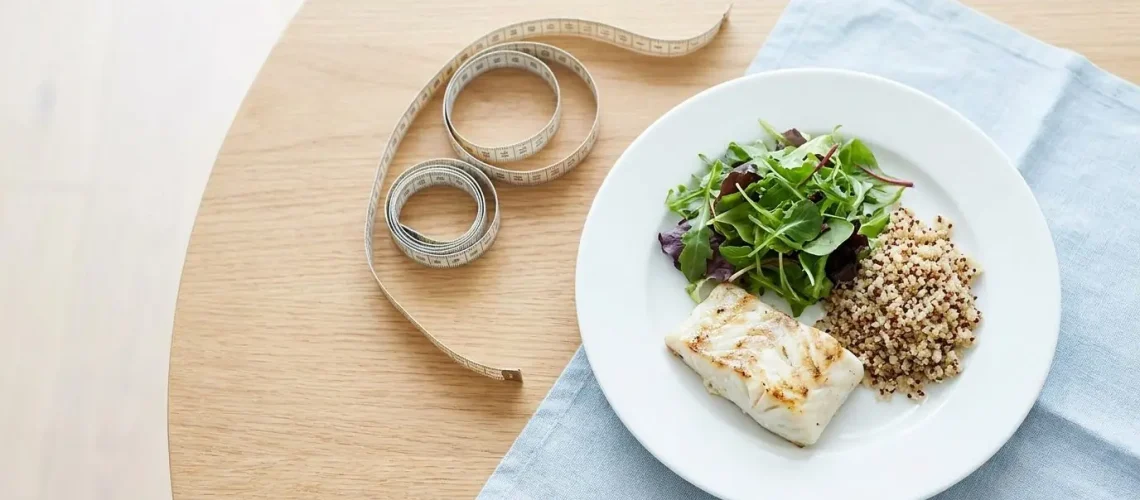
Healthy eating habits for weight loss do not require special foods. A simple plate pattern works very well. We often teach a model where:
- Half the plate holds vegetables
- One quarter holds lean protein
- One quarter holds whole-grain or starchy carbohydrates
Healthy fats and low-fat dairy or other calcium-rich foods fit around this base. This structure supports fullness, steady energy, and better blood sugar control without strict counting at every meal.
“Eat food, not too much, mostly plants.” u2013 Michael Pollan
Prioritize Vegetables And Fruits
Vegetables and fruits give a lot of volume for relatively few calories, which makes them powerful allies during weight loss. They bring fiber, water, vitamins, and minerals that support digestion, heart health, and immune function. Fiber slows digestion and helps meals feel satisfying, so people feel less driven to snack soon after eating.
A useful target is at least five portions of vegetables and fruits per day. We often suggest aiming for four servings of vegetables and three of fruit when possible. Fresh options work well, but frozen and canned items without added sugar or heavy sauces fit just as nicely. This makes it easier to keep choices ready even on busy days.
Examples of easy servings include:
- 1 cup raw leafy greens
- u00bd cup cooked vegetables
- 1 medium piece of fruit (such as an apple or orange)
- u00bd cup chopped fruit or berries
Small changes add up. Pre-cut carrots, cucumbers, or capsicum in the fridge can replace chips as a snack. Frozen mixed vegetables drop easily into soups, stews, omelets, and stir-fries. Leafy greens blend into smoothies without a strong taste. Exploring produce beyond apples and bananas keeps the plate colorful and helps healthy eating habits for weight loss feel less boring.
Choose Quality Protein Sources
Protein helps control hunger, protects muscle tissue during weight loss, and supports steady blood sugar. When meals include a solid protein source, many people notice fewer cravings later in the day. This makes it easier to keep a gentle calorie deficit without feeling deprived.
Good options include:
- Fish and skinless poultry
- Eggs
- Tofu and tempeh
- Lentils, chickpeas, and other beans
- Nuts and seeds
We encourage at least two servings of fish per week, with one serving from oily fish such as salmon, sardines, or mackerel for omega-3 fats. These fats support heart and brain health, which matters a lot for people with chronic conditions.
As a rough guide, many adults do well with around 20u201330 grams of protein at main meals. That might look like:
- 1 palm-sized portion of chicken, fish, or tofu
- 2 eggs plus some yogurt or milk
- 1 cup cooked lentils or beans
Cooking method matters almost as much as the protein itself. Baking, grilling, steaming, or air-frying with only a small amount of oil keeps calorie intake in a moderate range. We often suggest including some protein at each meal and snack, for example yogurt with nuts at breakfast, lentils at lunch, and grilled fish or tofu at dinner. This pattern supports both weight control and long-term health.
Select Smart Carbohydrates
Carbohydrates give the body energy, especially for the brain and muscles. The goal is not to cut them out, but to choose types that offer fiber and nutrients. As a simple rule, carbohydrates usually take up about one quarter of the plate during meals geared toward weight loss.
Whole grains such as brown rice, quinoa, oats, whole-wheat bread, and barley contain more fiber and micronutrients than white rice or white bread. That extra fiber slows digestion and supports a feeling of fullness. When we choose these grains in modest portions, they fit well into healthy eating habits for weight loss and support better blood sugar patterns over time.
Helpful swaps include:
- Brown rice instead of white rice
- Whole-grain bread instead of white bread
- Oats instead of sugary breakfast cereals
- Sweet potato instead of fries
Listening to blood sugar patterns, energy levels, and medical advice from your healthcare team helps fine-tune how much carbohydrate is right for you.
Include Healthy Fats In Moderation
Fat has more than twice the calories per gram compared with protein or carbohydrate, yet it also plays important roles. It supports cell structure, hormone production, brain health, and the absorption of vitamins A, D, E, and K. The key is to favor unsaturated fats and keep portions moderate.
Helpful sources include:
- Olive oil and canola oil
- Avocados
- Nuts and seeds
- Fatty fish such as salmon or sardines
At the same time, many people benefit from choosing low-fat or fat-free milk, yogurt, and cheese to reduce saturated fat. Measuring oils and nut butters with a teaspoon instead of pouring from the bottle helps keep added calories in a steady range. For example:
- 1 teaspoon oil for cooking
- 1u20132 teaspoons nut butter on toast
- A small handful of nuts as a snack
When we combine these fats with vegetables, whole grains, and lean protein, meals feel more satisfying and less like u201cdiet food.u201d A salad with olive oil dressing, grilled chicken, quinoa, and seeds offers color, crunch, and staying power, which makes it easier to keep healthy eating habits for weight loss over the long term.
Mastering Portion Control And Mindful Eating
Portion sizes in restaurants, cafes, and even home plates have grown over the past few decades. What looks u201cnormalu201d now often holds far more food than the body needs. This silent shift can cause weight gain, even when someone chooses mostly healthy foods. Pairing portion awareness with mindful eating skills helps people eat in line with their true needs rather than habit or stress.
Practical Portion Control Techniques
Portion control does not mean tiny meals. It means serving an amount that matches the bodyu2019s needs and activity level. One helpful step is to use smaller plates and bowls at home. When the plate is smaller, a moderate serving fills more of the surface and looks satisfying to the eyes and brain.
Simple visual guides can help:
- Protein: about the size of your palm
- Carbohydrate: about the size of your fist
- Added fats (like oil or butter): about the size of your thumb
Measuring tools also help. Using teaspoons for oil, butter, and dressings shows how quickly these foods add up. A kitchen scale can teach what three ounces of chicken or one serving of rice look like in real life. After a while, people can estimate portions more easily without measuring every time.
Other small habits that support portion control include:
- Serving food onto a plate rather than eating from large bags or containers
- Filling half the plate with vegetables first
- Pre-portioning snacks into small containers or bags
These strategies keep intake steady without strict calorie counting at every meal.
Cultivating Mindful Eating Practices
Mindful eating means paying attention while we eat instead of rushing or eating on autopilot. Many people eat meals with the television on or while scrolling on a phone. In that state, it is easy to miss both the taste of food and the bodyu2019s signal that it has had enough. This pattern often leads to eating past comfort.
We coach people to:
- Sit at a table when possible
- Turn off screens during meals
- Take a few deep breaths before starting to eat
Eating more slowly, putting the fork down between bites, and chewing food fully gives the stomach time to send fullness signals to the brain. Noticing flavor, texture, and aroma also makes meals more satisfying, even when portions are smaller.
Checking in with hunger on a simple zero to ten scale before and after eating builds awareness. Many people find it helpful to begin meals when hunger feels moderate and stop when comfort returns rather than when they feel stuffed. This practice protects healthy eating habits for weight loss without any strict calorie counting.
Emotions play a large role as well. Stress, boredom, sadness, and even celebration can trigger eating that has little to do with physical hunger. At Home Dietitians we gently explore these patterns and help people build other coping tools, such as short walks, breathing exercises, or calling a friend. Support around emotional eating often makes the difference between short-term change and long-term success.
The Essential Role Of Physical Activity
Food choices drive much of weight change, yet movement plays a powerful supporting role. When we add physical activity, we burn more energy, protect muscle tissue, and often feel better mentally. Long-term weight loss success research shows that people who combine healthy eating habits for weight loss with regular movement tend to keep weight off longer than those who rely on diet changes alone.
Exercise does more than change the number on the scale. It can support mood, reduce symptoms of anxiety and depression, lower blood pressure, and support better sleep. For people with chronic conditions such as type 2 diabetes or heart disease, staying active often helps medications work more smoothly. Movement also helps preserve muscle as we age, which protects metabolism.
Types Of Exercise For Weight Loss
Moderate-intensity aerobic activity forms a strong base. Many adults do well with at least thirty minutes of brisk walking, cycling, or swimming on most days of the week. This does not have to happen all at once. Three ten-minute walks across the day still support better health and weight control.
Examples of activities that work for many people include:
- Brisk walking outdoors or on a treadmill
- Cycling (outdoor or stationary)
- Swimming or water aerobics
- Low-impact fitness classes
- Dancing at home
Some people, especially those who sit many hours for work, may need closer to sixty minutes per day to see weight change. Strength training at least two days per week supports this effort. Lifting weights, using resistance bands, or doing bodyweight moves like squats and pushups helps build and protect muscle mass. That extra muscle tissue uses more energy even at rest, which helps support a healthy weight.
We always encourage people to choose activities they genuinely like. Enjoyment matters because it keeps movement consistent. Dancing in the living room, gardening, or playing with children all contribute to daily activity when done with enough effort to raise the heart rate slightly.
Increasing Daily Movement
Formal workouts are only part of the picture. Light activities through the day add up in a big way. Standing during phone calls, taking the stairs, walking to a farther bus stop, or parking at the edge of the car park each add a small boost.
Setting a simple step goal can help. Many people start by tracking their usual steps for a week, then adding one or two thousand more per day. Short walking breaks every hour support circulation and focus, especially for desk workers. By tying movement to daily routines, such as a walk after dinner or during lunch, we help physical activity feel like a natural part of life rather than a chore.
How Home Dietitians Supports Your Weight Loss Process
Healthy eating habits for weight loss become far easier with skilled support. At Home Dietitians we focus on sustainable, science-based care rather than quick fixes. All of our services are delivered by registered clinical dietitians who are trained to work with medical conditions, medications, and complex lifestyles.
We begin by listening carefully to each personu2019s:
- Health history and current diagnoses
- Daily schedule and energy levels
- Cultural food preferences and cooking skills
- Personal goals and concerns
This allows us to create personalized nutrition care plans that fit real life. For someone with diabetes, this may include detailed guidance on carbohydrate spacing and blood sugar patterns. For a busy parent, it may center on simple meal structures, smart snacks, and planning for family dinners.
Our support does not stop with a single meal plan. We help clients build habits step by step, such as adjusting breakfast choices, adding vegetables to lunches, or reshaping evening snacking. We also address emotional eating, social events, and travel, which are common points where people feel plans u201cfall apart.u201d This compassionate, practical style helps people feel supported rather than judged.
“Nutrition advice should fit your life, not the other way around.” u2013 Registered clinical dietitian at Home Dietitians
To keep care accessible across the Klang Valley, we offer flexible online nutrition consultations as well as in-clinic sessions at our Bukit Damansara location. This means clients can choose video calls from home or meet in person when that feels helpful. Whether someone comes for weight loss, blood pressure control, cholesterol management, or broader lifestyle change, we keep the focus on safe, evidence-based strategies that support the whole person.
Conclusion
Lasting weight loss does not come from the latest trend or a week of extreme dieting. It grows from everyday choices that respect how the body works. When we focus on healthy eating habits for weight loss, we build meals around vegetables, lean proteins, whole grains, and healthy fats while keeping portions in a steady range. We pair this with mindful eating and regular movement so changes stick.
The process takes time, and there will be days that feel harder than others. That does not erase progress. What matters is the pattern over weeks and months, not one meal or one weekend. Each choice to cook a balanced meal, stop eating at comfortable fullness, or go for a walk builds a stronger base for health.
Professional guidance can make this path far less confusing. As registered clinical dietitians, we at Home Dietitians support people with medical conditions, busy schedules, and family needs to create realistic, evidence-based plans. If this article speaks to your experience, consider taking the next step by assessing your readiness, setting one or two action goals, and reaching out for support. With the right knowledge and a caring team beside you, steady, sustainable weight management is within reach.
FAQs
Question 1 How Quickly Can I Expect To Lose Weight With Healthy Eating Habits
With consistent healthy eating habits for weight loss and a modest calorie deficit, many people see a loss of about one to two pounds per week. The first week may show a bit more due to water shifts. After that, the rate usually settles into a slower, steadier pattern that is easier to maintain and kinder to long-term health.
Question 2 Do I Need To Completely Eliminate My Favorite Foods To Lose Weight
Total removal of favorite foods often backfires and leads to cravings or binge episodes. We encourage people to keep these foods in their lives, just less often or in smaller portions. Sometimes we also adjust recipes to make lighter versions. This balanced approach helps healthy eating habits for weight loss feel realistic over the long term.
Question 3 Can I Lose Weight Without Exercising
Weight loss is possible through food changes alone if a calorie deficit is present. However, adding movement makes the process smoother, supports mood, and protects muscle mass. Physical activity also helps people keep the weight off once they reach their goal. We usually suggest combining both food and movement changes for the best results.
Question 4 How Do I Know If I Need Professional Help From A Dietitian
Support from a registered dietitian is very helpful for people with chronic health conditions such as diabetes, heart disease, kidney issues, or digestive disorders. It also helps those who take several medications or who have tried many diets without lasting success. At Home Dietitians we design personalized medical nutrition therapy that respects lab results, symptoms, and lifestyle, so changes feel safe and doable.
Question 5 What Makes Home Dietitians Different From Other Weight Loss Programs
Many weight loss programs rely on generic meal plans or strong marketing claims. At Home Dietitians all guidance comes from registered clinical dietitians who ground their advice in nutrition science. We build plans around each personu2019s health conditions, goals, and food preferences and offer both online and in-clinic support across the Klang Valley. This mix of professional expertise and flexible care helps people create habits they can live with, not just follow for a short time.
Ready for personalized guidance? Join our science-backed weight management program.
For a full plan, see our hub on Weight Management Malaysia.