
Guidelines for Tube Feeding's Caretakers
Table of Contents
Suitable Milk Formula for Nasogastric Tube Feeding

For patients undergoing nasogastric tube feeding, selecting the appropriate oral nutrition formula is crucial. Many mistakenly believe that patients only need to consume regular milk powder; however, not every commercially available tube feeding formula is suitable for every patient.
To ensure patients receive proper nutrition, dietitians calculate the required amounts of carbohydrates, proteins, and water based on the specific conditions of each patient. Tube feeding formulas may need to be adjusted for different diseases and situations to meet the unique needs of patients. For example:
- Diabetic patients should choose formulas that are low in sugar, have a low glycemic index, and are high in fiber to help control blood sugar
- Patients with kidney/heart diseases may need to adjust protein content while also limiting fluid, potassium, and phosphorus intake.
- Cancer patients may require high-protein formulas, with a focus on high-quality proteins and high medium-chain triglycerides (MCT) or polyunsaturated fatty acids (EPA) to quickly provide energy or slow down inflammation.
- Critically ill patients/post-major surgeries/severely infected or wounded patients may benefit from high-protein formulas to aid in wound healing. Patients with bedsores due to prolonged bed rest also require high-protein formulas.
- Patients with constipation or diarrhea may need formulas with high fiber to promote intestinal health. For patients intolerant to lactose, lactose-free formulas can be chosen.
In general, it is not recommended to directly use blended food for nasogastric tube feeding to avoid tube blockage. Even if attempts are made to dilute the food by adding water, it can lead to diluted nutrition, making it challenging to meet the patient’s nutritional needs. In clinical practice, tube blockage can result in the accumulation of food residues, causing unpleasant odors and increasing the risk of infection.
Therefore, it is recommended to use specially designed tube feeding formulas, as these formulas are precisely calculated, ensuring both the safety and effectiveness of meeting the patient’s nutritional needs while reducing the risk of tube blockage and infection. It is also important for healthcare professionals to closely monitor the patient’s response to the tube feeding formulas and make any necessary adjustments to ensure optimal nutrition. Additionally, it is crucial for patients to receive education and support on proper tube feeding techniques and hygiene to minimize complications. Ultimately, ensuring that patients “eat right during confinement” through tube feeding is essential for their overall well-being and recovery.

Important considerations for home nasogastric tube feeding
1. Avoiding the risk of aspiration pneumonia
Ensure the tube is correctly positioned to prevent the feeding formula from entering the lungs, reducing the risk of pneumonia. Follow the guidance of healthcare professionals and monitor the patient’s response and any discomfort symptoms.
2. Importance of posture
Patients must adjust their posture during feeding, whether they are conscious or in a coma. The upper body should be in an upright position, with the bed angle usually between 30 to 45 degrees. This ensures that the food enters the stomach, preventing reflux and reducing the risk of gastric acid reflux.
3. Oral care
It is recommended to perform oral care twice a day to maintain oral hygiene. Oral care includes brushing teeth, rinsing, and keeping the mouth clean to reduce the risk of oral infections. Oral hygiene is particularly important for nasogastric tube patients, as oral bacteria may enter the tube and cause infections.
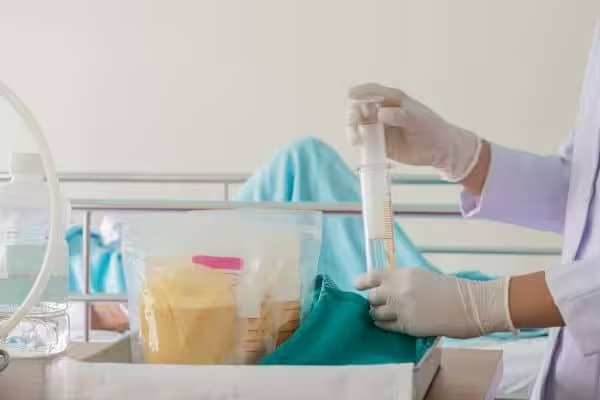
Key Steps for Nasogastric Tube Feeding
Check gastric residuals
Before starting feeding, use a syringe to aspirate and check for gastric residuals. If any abnormalities are observed, such as unusual color or odor, inform healthcare personnel for further investigation.
Control water temperature and mixing
Ensure the water temperature used to mix the nutritional formula is moderate, neither too cold nor too hot. During mixing, stir carefully to ensure no food particles are left, preventing tube blockage.
Slow feeding
Administer the formula slowly into the nasogastric tube, feeding in increments to avoid direct, rapid infusion. This helps the patient’s gastrointestinal system gradually adapt to the food, reducing discomfort. If the patient experiences coughing or choking, feeding should be stopped immediately.
Nasogastric tube flushing
Use 15 to 30 milliliters of warm water for pulsatile flushing before and after each feeding to reduce the risk of blockage and prevent drug residues from corroding the tube wall. Flushing also helps maintain tube patency.
Maintain proper posture
Ensure the bed is elevated at an angle of 30 to 45 degrees throughout the feeding process.
Complete feeding
After feeding is complete, flush the nasogastric tube with some plain water, then cover the tube end. The patient should maintain the same sitting position for about 20 to 30 minutes, allowing the food to digest adequately before lying down to minimize the risk of reflux.
Summary
Patients undergoing nasogastric tube feeding need to choose suitable tube feeding formulas based on their specific health conditions and nutritional needs. Correct posture, hygiene, and procedures are crucial for home nasogastric tube feeding to ensure the patient’s safety and health.
The selection of tube feeding formulas must be done by a dietitian based on the patient’s disease and individual needs to formulate the most appropriate dietary plan. Only through the use of suitable products and proper methods can the patient be assured of receiving the necessary nutritional support while reducing the risk of complications. Ask our dietitians to plan a suitable milk formula for you !